“Habits are the invisible architecture of daily life. We repeat about 40 percent of our behavior almost daily, so our habits shape our existence, and our future. If we change our habits, we change our lives.” ~ Gretchen Rubin
Rubin, Gretchen. Better Than Before. New York, Crown Publishers, 2015.
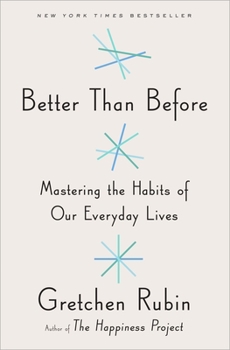
Gretchen Rubin, author of The Happiness Project, has taken the most original and interesting approach to the much-discussed subject of habits in her 2015 book, Better Than Before: Mastering the Habits of Our Everyday Lives. I came across this gem when she referenced something from it in an IG post recently; I was immediately intrigued.
Gretchen Rubin has developed this framework she calls The Four Tendencies. It’s this idea that almost everyone falls into one of four distinct groups:
- “Upholders respond readily to both outer expectations and inner expectations” (Rubin, p. 16).
- “Questioners question all expectations, and will meet an expectation only if they believe it’s justified” (Rubin, p. 16).
- “Obligers respond readily to outer expectations but struggle to meet inner expectations” (Rubin, p. 16).
- “Rebels resist all expectations, outer and inner alike” (Rubin, p. 16).
If we can figure out which group we fall into, if we can gain that self-knowledge, we can dial in and figure out which approach to habit-building will work for us. This was an epiphany for me. All other books I’ve read on habits focus on the science of habit-building as a one-size-fits-all approach that will really only work for a certain percentage of the population.
So first things first, finding out which of the Four Tendencies you fall into. For example, if you are an Upholder, like me, then you “wake up and think: ‘What’s on the schedule and the to do list today?’ They (Upholders) want to know what’s expected of them, and to meet those expectations…they’re self-directed and have little trouble meeting commitments, keeping resolutions, or meeting deadlines (they often finish early)…Upholders may struggle in situations where expectations aren’t clear or the rules aren’t established” (pp. 18-19).
Next up, ask yourself some questions that will help you narrow down what habits you want to focus on building. Questions like, how do I like to spend my time? What do I value? What are my current habits, both those I want to keep, those I want to change, or those I want to add? Do you have things in your calendar that you look forward to? Is that something you want to build more of into your life? This is a great starting point to figure out what you’re looking to accomplish with your habits.
I think one of the most helpful sections of the book was Desire, Ease, and Excuses. Do you do better abstaining altogether from something in order to quit it or do you do better with moderation, meaning most of the time you exclude something but you allow yourself to have it once in a while without it derailing you? Then there’s the convenience factor. As Gretchen Rubin says, “The amount of effort, time, or decision making required by an action has a huge influence on habit formation. To a truly remarkable extent, we’re more likely to do something if it’s convenient, and less likely if it’s not” (p. 144). We can put safeguards in place also to prepare for things that might knock us off track. Being prepared can be the difference between keeping a good habit and ending up back at square one. Then there’s loop-hole spotting. For example, do you ever find yourself using phrases like “You only live once” or “What’s one beer?” We can talk ourselves into or out of almost anything in the heat of the moment so we have to be on the lookout and have a plan to reject that self-talk.
One more juicy tidbit to share. The “No Finish Line” trap. This can help you reach a one-time goal but it will not work well for forming a habit. For example, training for a marathon. Once the marathon is over, now what? Will you still keep running and training every day if you don’t have something you’re working towards? This shows the striking different between goals and habits. A habit is something you want to build into your DNA, something you do without even thinking, and something that gives you a lasting result that keeps you wanting to continue to do it. Mindset is everything.
If you’re interested in giving this book a try, you can snag a physical copy at your local library, or see if you can download it free using apps like Hoopla or Cloud Library. If you’d like to buy it, you can get a used copy through Amazon for under $5.00. You can also see what else Gretchen Rubin is up to by visiting her website GretchenRubin.com. She has lots of other great content, including a podcast. I hope you give this one a try!
 funnyfacebookgirl